GardenShare

GardenShare

Monday, January 19, 2015

JUST WHO WILL LOSE SNAP BENEFITS NEXT YEAR?


Nearly 1 million people will lose SNAP benefits in 2016 as fewer states qualify for a waiver from the law that limits a childless adult’s benefits to 3 months if he or she isn’t working at least part-time or enrolled in a job training program for at least 20 hours a week. Most of those affected are men (60%). Over 4 out of 5 (82%) earn less than 50% of the federal poverty level ($5,835 a year), and nearly one-third are over 40 years old.


Source: Center for Budget and Policy Priorities, 1/13/15, SNAP Cuts

Friday, January 16, 2015

Hope to see you tomorrow!


Come warm up with GardenShare at our
a
Growing Community Social


Saturday, January 17, 2015
2 to 4 p.m.
The TAUNY Center

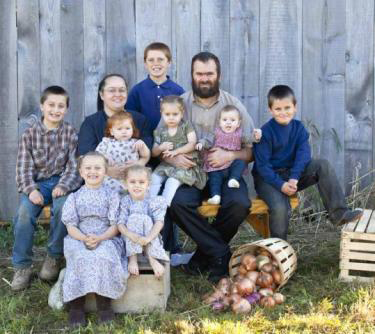
Enjoy chili and cornbread, meet GardenShare's new executive
director, and join GardenShare board, staff, and friends in 
congratulating 2014 Growing Community Award recipients 
Daniel and Mendy Martin and family.
  
Each year GardenShare presents the Growing Community Award 
to an individual or organization whose efforts strengthen food 
security in northern New York State. 

The Martins, who own and operate a farm market on Route 11B outside of Potsdam, have been an influential part of the 
local food movement since 1998 when they started a U-pick strawberry operation. Today their farm stand offers quality 
vegetables grown by the Martins and other local farmers. 

Learn more about the Martins here.

The Growing Community Social is free and all are welcome. We hope you'll join us - and bring your friends!


And check out our advance news coverage of the event here!

SNAP BASICS UPDATED


SNAP is one of the few means-tested government benefit programs available to almost all households with low incomes. After unemployment insurance, SNAP historically has been the most responsive federal program in assisting families and communities during economic downturns. SNAP participation rises during economic downturns by an average of 2 to 3 million people for each percentage-point increase in the unemployment rate. The number of individuals receiving SNAP in an average month grew from 26.3 million in 2007 to over 46 million in 2014.  SNAP benefits are modest; they average less than $1.40 per person per meal.  Starting in November 2013, after the 2009 Recovery Act’s temporary benefit increase expired, the average SNAP household received about $255 a month in benefits for the rest of fiscal year 2014. SNAP Households spend over 85% of their benefits on fruits and vegetables, grains, dairy, meat, and meat alternatives. 


Source: Center for Budget and Policy Priorities, 1/8/15, SNAP Update

Thursday, January 15, 2015

Help wanted: Cornell hiring beginning farmer project coordinator

The Cornell Small Farms Program and Northeast Beginning Farmers Project are hiring a full-time Project Coordinator for two new beginning farmer initiatives.

Job Description 
Beginning Farmer Project Coordinator  
Extension Support Specialist I (Band E/Exempt/39 hours week)
Department of Horticulture
College of Agriculture and Life Sciences
Ithaca, NY

The Cornell Small Farm Program (SFP) engages in research and extension projects and collaborations that support and enhance the viability of small farms in New York. This Coordinator will support the Northeast Beginning Farmer (NEBF) Project, a major SFP effort focused on beginning farmer training, their support networks, and informational resources. 

The department is currently searching for a Project Coordinator who will oversee all aspects of a USDA project designed to 1) facilitate military veterans entering into farming as a career, and 2) improve long-term viability of "advanced" beginning farmers (defined as farmers operating 3-10 years).  Facilitate the development and implementation of project work plans by collaborators for each component of the project, coordinate timelines, manage relationships, and synthesize evaluation data into reports.  Lead the outreach for the overall project, publicizing events and impacts of the project and collaborating with the SFP outreach staff to achieve these goals. Convene advisory groups for all aspects of the work.

The Project Coordinator will also implement specific projects to provide training for beginning farmer service providers and collaborate with other organizations and individuals to develop new informational resources for beginning farmers. Work closely with the SFP Beginning Farmer Project Manager and the SFP Director to insure participation and engagement of partners and stakeholders and share outcomes with other organizations nationally.

The coordinator will work very independently, making decisions to foster the success of the project and to achieve the desired outcomes. These decisions will often require creativity as well as a good understanding of the abilities and resources of project collaborators. Develop and implement surveys that will target farmers, educators and others interested in supporting beginning farmers, and help the collaborators use this information to modify work plans and tasks. Monthly travel and overnight trips to visit with project collaborators around NY state are expected.

The Project Coordinator will be a full member of the SFP staff and is expected to develop close working relationships with all of the other SFP Associates, participating in staff meetings and other SFP events.  Will also represent the Project and Program at state meetings and provide presentations to farmers and other stakeholders about the SFP efforts. Contributions to the monthly SFP e-newsletter and quarterly magazine expected. Responsible for supervising 1-2 undergraduate students and supporting project collaborators.

This position is renewable annually, based upon performance and funding.  The position is currently supported by  a 3-year USDA Beginning Farmer and Rancher Development Program (BFRDP) grant.

Qualifications
Required:
•        Bachelor's degree in agriculture, communication, education, biology, natural resources, or related field preferred.
•        Two-three years' experience in public education, either formal or informal, as well as demonstrated understanding of farming.
•        Proven skills in project management and coordination are essential
•        Must be able to work with diverse audiences and partners, both independently and as part of a team
•        Excellent communication skills, including writing and public speaking.
•        Good working knowledge and experience with current software, such as MS Office, Qualtrics, PowerPoint.
•        Must be personable, flexible and possess excellent organizational skills.
•        Excellent customer service skills and demonstrated ability to communicate with a broad range of people is essential. 
•        Must have the ability to multi-task and prioritize.
•        Ability to work well and establish effective working relationships with a wide variety of faculty, staff, and students while creating a high-quality and respectful work environment. 
•        Must be comfortable working in an environment where change in process is the norm. 
•        Must have and maintain a valid NYS Driver's License and be willing to travel with occasional overnight trips being required.

Preferred:
•        Master's degree in agriculture, education, communications, natural resources, or related field preferred.  
•        Minimum of 3 years of direct farm experience and/or experience providing services to beginning farmers strongly preferred.
•        Enthusiasm for supporting entry into farming as a career is a plus

Background check may be required. No relocation assistance is provided for this position. Visa sponsorship is not available for this position.


Will the new Congress roll back food policy?


In the past few years, the federal government became more involved in what Americans eat, from requiring schools to serve fruit at lunch to eliminating transfats in doughnuts. But the new Republican Congress is already laying the groundwork to push back in 2015. The $1.1 trillion omnibus spending bill Congress passed in December allows states more flexibility to exempt schools from USDA’s whole-grain standards if they can show hardship and to halt future sodium restrictions.  New House and Senate leaders of the committees responsible for reauthorizing School Nutrition programs have been openly critical of the 2010 Healthy Hunger-Free Kids Act, the bipartisan law that included many reforms that are now sparking complaints among schools and Republicans who argue the rules are too prescriptive and costly. The School Nutrition Association, which lobbied aggressively to scale back the new regulations, is asking to drop a mandate that kids take a half-cup serving of fruits or vegetables,


Source: Politico, 12/30/14, Food Fight

Wednesday, January 14, 2015

Food Policy Council webinar coming up in February

Food Policy and Regional Food Systems: Opportunities for Networking across Jurisdictions

Wednesday, February 11, 2015
1:00 - 2:15 PM EST
Join Us for This Webinar:

Where does your local food policy council fit within the regional food system? Would you like to play a stronger role in both your locality and at a regional level but not sure how? Functioning with limited resources and volunteer members, it can often be easiest for a food policy council to concentrate locally. By understanding the role of local food policy councils within the context of a regional food system, groups can network across geographies to maximize impact and effectiveness of policy changes.

During this webinar, expert panelists will address a number of big picture questions local food policy councils have about regional food systems, including:
  • The role of local food policy councils within a regional network
  • When is it beneficial to connect across a region
  • How to determine your "region" and what to do when definitions vary
  • Best practices and challenges to organizing and building regional networks, including resources and infrastructure needed
These issues will be addressed to show participants how networking across jurisdictions can positively influence food system change. The webinar will also include time for participant Q&A.


SUGGESTED PARTICIPANTS: 
Food policy council coordinators and members, policy-makers, members of the local and regional food system and food system advocates


This event is sponsored by the Institute for Public Health Innovation and the Johns Hopkins Center for a Livable Future


SHOULD THE US HAVE A NATIONAL FOOD POLICY?


Last month, a Washington Post op-ed piece argued that food production, distribution, and consumption represent the largest sector of the U.S. economy, yet come under no national plan or single official. “Government policy in these areas is made piecemeal,” the authors wrote. “Diet-related chronic disease, food safety, marketing to children, labor conditions, wages for farm and food-chain workers, immigration, water and air quality, greenhouse gas emissions, and support for farmers: These issues are all connected to the food system. Yet they are overseen by eight federal agencies. Amid this incoherence, special interests thrive and the public good suffers.” The op-ed’s authors called on President Obama to state a national policy that balances public health values against agricultural interests—paying attention to food safety, price transparency, worker protections, children’s health, animal welfare and climate resiliency—and create a White House council to ensure federal agencies are not working at cross-purposes. Some, though, would argue that what’s needed isn’t just a national food policy to articulate change, but a national food agency to make it happen.


Source: National Geographic, 12/12/14, Food Policy